
I’ve worked with over 25+ cannabis brands in the past decade, and I can tell you the single most common problem that costs them thousands of dollars in wasted design work, rushed timelines, and missed opportunities:
They don’t have their own logo.
I don’t mean they don’t own a logo. I mean they can’t find their logo in a usable format when they need it.
Here’s what happens at least once a month: A dispensary gets invited to sponsor a local event. The organizer needs a logo for the poster. The marketing coordinator searches their email for “logo” and finds a 180-pixel JPEG with a white background that’s been compressed so many times it looks like it was printed on a potato and then photographed.
They send it over. The designer asks for a vector file. The marketing coordinator doesn’t know what that means. They call the person who made the original logo three years ago on Fiverr. That person doesn’t respond because the account was deleted. The event organizer gives up and just uses text.
Opportunity lost. And it happens constantly.
If your cannabis brand doesn’t have professional, organized, accessible assets for cannabis branding in 2026, you’re not competing. You’re cosplaying as a business.
Here’s what’s changing, what you need to fix, and how to set it up properly.

The Baseline Standard: What Every Cannabis Brand Needs in 2026
The barrier to entry in cannabis keeps dropping. More licenses, more competition, more brands fighting for the same customers. When everyone has access to decent flower and competitive pricing, your brand is the only differentiator you control.
But “branding” doesn’t mean a cool logo and some Instagram posts anymore. It means having a complete, professional, accessible system that works whether you’re creating a menu board, sponsoring an event, or launching a website.
Here’s the minimum standard for 2026:
1. Logo Files (Multiple Formats)
You need at least these versions:
- Vector files (AI, EPS, or SVG) – scalable to any size without losing quality
- High-res PNG (transparent background) – for digital use
- High-res PNG (white background) – for printing on dark materials
- High-res JPEG (white background) – for when transparency isn’t needed
- Horizontal version – for website headers, email signatures
- Vertical version – for social media profiles, mobile displays
- Icon/badge version – for small applications like favicons, app icons
Each of these should be saved in a clearly labeled folder with obvious file names:
BrandName_Logo_Vector.aiBrandName_Logo_Horizontal_Transparent.pngBrandName_Logo_Vertical_White-BG.png
Not “logo final FINAL v3 (1).jpg”
2. Brand Colors (Documented)
Write down your exact brand colors in every format someone might need:
Primary Green:
- HEX:
#2D5C3F - RGB:
45, 92, 63 - CMYK:
51, 0, 32, 64 - Pantone:
7483 C
Why all of these? Because your web developer needs HEX. Your t-shirt printer needs Pantone. Your business card designer needs CMYK. If you don’t have this documented, every vendor will interpret “green” differently and your brand will look inconsistent.
3. Typography (Specified and Accessible)
Document which fonts you use and where to get them:
Headings: Montserrat Bold
- Available: Google Fonts (free) or Adobe Fonts (license required)
- Backup: Arial Bold
Body Text: Open Sans Regular
- Available: Google Fonts (free)
- Backup: Helvetica
If you’re using a paid font, make sure you have the license and the actual font files saved in your brand folder. If you’re using a free font, include a link to where someone can download it.
4. Brand Guidelines (One-Page Minimum)
A one-page PDF that shows:
- Logo usage examples (correct and incorrect)
- Color palette with codes
- Typography rules
- Spacing and sizing guidelines
- What NOT to do (stretch logo, change colors, use low-res files)
This doesn’t need to be a 50-page brand book. One page that prevents the most common mistakes is enough.
How to Actually Organize This: The Google Drive System
Here’s the system I set up for every client, and it takes about 30 minutes:
Create a Google Drive folder structure:
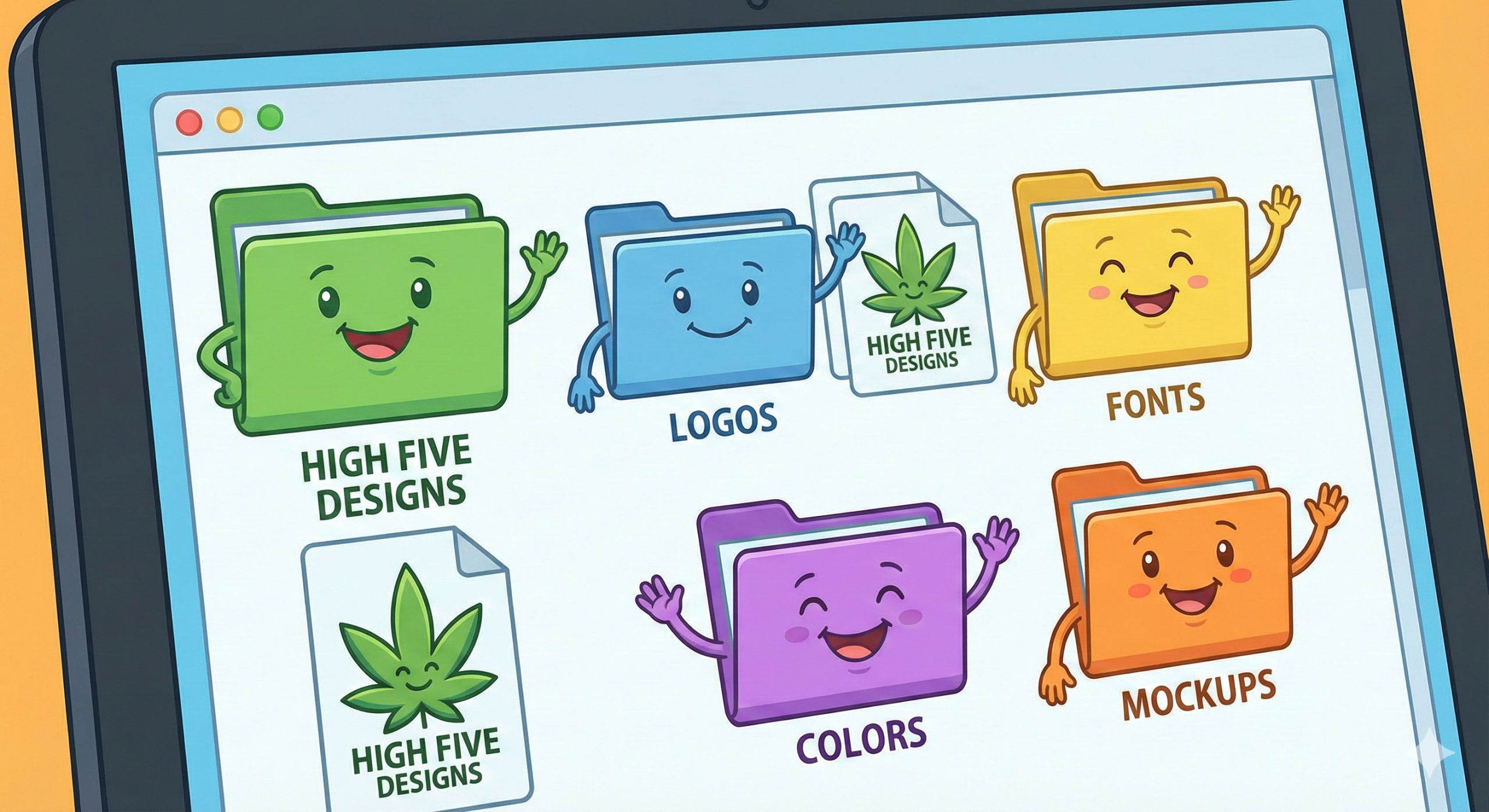
📁 [Brand Name] - Brand Assets
  📁 Logos
    📁 Vector Files
    📁 PNG - Transparent
    📁 PNG - White Background
    📁 JPG
  📁 Colors & Fonts
    📄 Brand Colors.pdf
    📄 Font Guidelines.pdf
    📁 Font Files (if licensed)
  📁 Brand Guidelines
    📄 [Brand Name] Brand Guide.pdf
  📁 Product Photography
    📁 Flower Photography
    📁 Concentrate Photography
    📁 Lifestyle Photography
  📁 Templates
    📄 Social Media Template.psd
    📄 Menu Board Template.indd
Then:
- Make this folder shareable with “Anyone with the link can view”
- Save that link somewhere permanent (website footer, internal docs, email signature)
- When anyone asks for brand assets, send them the link
Pro tip: Create a simple landing page on your website at yourbrand.com/press or yourbrand.com/brand-assets that links directly to this folder. Now anyone can find your logos 24/7 without emailing you.
Why This Matters More in Cannabis Than Other Industries
Cannabis brands face unique challenges:
1. Compliance changes constantly. When regulations shift, you might need to redesign packaging, update menus, or create new marketing materials on short notice. If you can’t find your logo files quickly, you’re scrambling.
2. You can’t advertise everywhere. Traditional advertising channels are limited, so when opportunities appear (local events, partnerships, collaborations), you need to move fast. Having assets ready to go is the difference between “yes” and “we missed the deadline.”
3. Print vendors are picky. Printers, sign shops, and swag companies won’t accept low-res files. If you can’t provide vector logos or high-res PNGs, they’ll either refuse the job or charge you extra for design cleanup.
4. Professionalism is your differentiator. Cannabis still fights stigma. A brand that has its shit together—clean files, documented standards, quick turnaround—signals legitimacy. A brand sending pixelated JPEGs from 2019 signals amateur hour.
Other Branding Trends for Cannabis in 2026
Beyond file organization, here’s what’s shifting:
Minimalism Over Complexity
The “psychedelic weed leaf covered in smoke” aesthetic is dying. Clean, minimal, modern design is winning. Think Apple Store, not head shop.
Why: Cannabis consumers in 2026 aren’t just stoners. They’re professionals, parents, athletes. Your branding should appeal to them, not alienate them.
Tech Integration is Non-Negotiable
Your brand needs to work seamlessly across:
- POS systems (Dutchie, Jane, Treez)
- Loyalty platforms (Springbig, Alpine IQ)
- E-commerce websites
- Social media
- Email marketing
If your brand assets aren’t optimized for digital, you’re behind.
Consistent Cross-Platform Presence
Your Instagram, website, email campaigns, in-store signage, and packaging should all feel like the same brand. This requires documented standards and accessible files.
Storytelling Through Visuals
High-quality product photography isn’t optional anymore. Customers expect:
- 360° product views
- Macro shots showing trichomes and detail
- Lifestyle photography showing consumption contexts
- Video content for social media
If your brand still uses stock photos or low-res phone shots, you’re losing sales.
What To Do This Week
If you’re reading this and realizing your brand files are a mess, here’s your action plan:
Monday: Audit what you have. Search your email, your computer, your Google Drive for every logo file you can find.
Tuesday: Identify what’s missing. Do you have vector files? High-res PNGs? Brand color codes?
Wednesday: Fill the gaps. If you don’t have vector files, contact your original designer or hire someone on Upwork to recreate them from your best existing file.
Thursday: Set up the Google Drive folder structure above. Upload everything.
Friday: Create a one-page brand guide PDF. Use Canva if you need to—it doesn’t have to be fancy.
Next Monday: Add a link to your brand assets on your website and in your email signature.
That’s it. Six days and you’ll be more organized than 90% of cannabis brands.
The Bottom Line
Professional cannabis branding in 2026 isn’t about being trendy or creative (though that helps). It’s about being organized, accessible, and consistent.
If someone emails you at 4 PM on a Friday asking for your logo, you should be able to send them a link to a folder with every file format they could possibly need, properly labeled and ready to use.
If you can’t do that, you’re not ready to scale.